
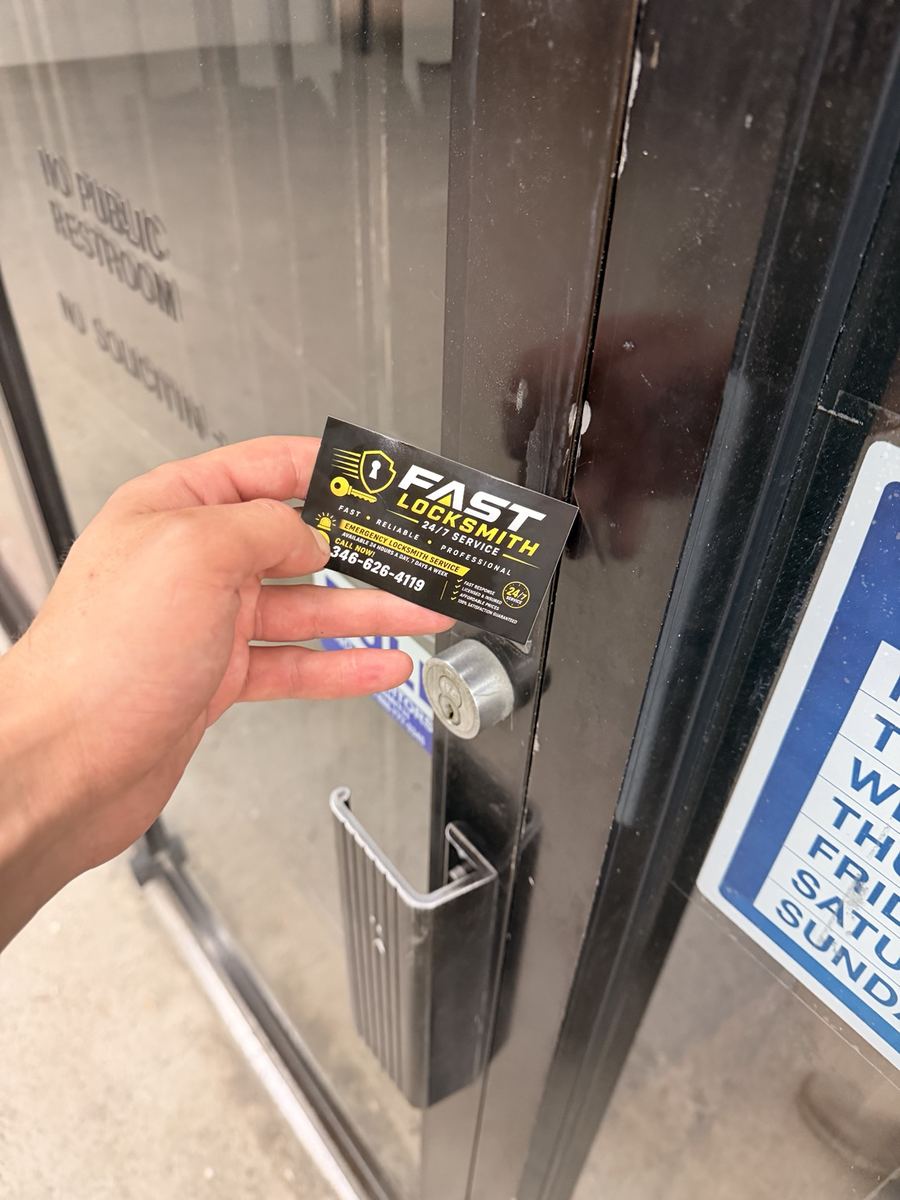
If a lock has failed and the door won't secure, a technician comes.
A neighbor's tip: wait to buy hardware until we've looked at the doors.
A New Owner, Six Doors and a Much Smaller Bill
Expectations and reality don't always match. Here's a typical example from a house in an older part of Spring, close to Old Town.
A couple closed on a house and called us that afternoon. They had read that new owners should change every lock, a knob and a deadbolt each, and a long day of noise. The husband had cleared his schedule. They wanted the job done before the movers came on Saturday.
Our dispatcher, who lives a few blocks away, asked the plain questions. Was the house empty and safe? Yes. How many doors? Six, with three deadbolts. Did they know the brand of the existing locks? Not really. Did they have closing papers? Yes, a copy on the phone. She said a technician would look at the locks first, and said he was heading over.
The technician arrived in uniform and showed his ID, then checked the husband's license against the closing papers. He walked through the house and tried every key. Four of the six locks were in good shape and from the same brand; two, on the back doors, were loose and worn. He suggested rekeying the four good ones and changing only the two bad ones. The husband blinked.
He rekeyed the four with fresh pins in a few moments each, and then took the worn back door lock apart. The new deadbolt's latch didn't line up on the first try, because the door had been bored slightly off. He used a chisel to adjust the strike pocket and the second try slid home cleanly. He matched all six doors to one key and tested each. The technician wrote the rough difference on the back of the invoice with a pencil.
The wife looked at the old locks laid out on the step and said it was a lot less work than she'd expected. The neighbor's advice: let somebody look before you buy a box of locks.
Changing Locks the Sensible Way
Change Only What Needs Changing
Change only what needs changing, and rekey the rest. It's the quickest way to a secure house without waste.
First-Week Locks for New Owners
New homeowner locks are best handled in the first week. We rekey the good ones and replace the weak ones.
Knob and Deadbolt Set
A knob and deadbolt set is the common pair on a front door. We fit both and test them together.
Latch That Won't Line Up
A latch that won't line up with its strike usually means the bore or the pocket is slightly off. A chisel and a small adjustment fix it.
Matching Keys After a Change
Matching keys after a change means one key for the family. We key the new locks to match the rekeyed ones.
Reading the Old Brand
We read the brand and age of existing locks. A good older lock is worth keeping, and we say so.
Hardware You Pick Out Yourself
If you've chosen hardware you like, bring it. We'll confirm it fits the door before we cut.
Back Doors and Side Entries
Back doors and side entries are the weakest points in most houses. They get the same care as the front.
Cleanup Afterward
We pick up the old parts, sweep the step and leave the doors working. You can keep any piece you want.
Closing Papers on the Phone
A photo ID and a closing statement, lease or bill that shows the address. A phone copy works.
Finish and Style Choices
Polished brass, satin nickel, matte black and bronze are the usual finishes. We match what's on the door, or we help you choose a new set.
Fitting Around Your Moving Day
Where you are in Spring decides which technician is sent, and the dispatcher tells you who is coming. Homes across Spring, from the older streets to the newer subdivisions, are regular stops.
A Neighbor's Honest Opinion in Uniform
Expect a technician in our uniform who is glad to show his photo ID. He tells you which locks to keep, which to change and why. He wipes down each new lock, checks the screws once more and leaves the packaging with you.
We are licensed and insured, and our Google rating from local households stands at 5 stars.
Lock Change Around Spring
Lock change in Spring is often tied to a move. New owners, tenants taking over a lease and families after a break-in all want fresh locks. The right amount of change is rarely the maximum.
A good rule is to replace locks that are loose, damaged or low-grade, and rekey the ones that are solid. That approach keeps the quality of your hardware and still ends the old key problem.
Older homes near Old Town sometimes have original hardware that is worth keeping. Brass knobs and sturdy deadbolts from earlier decades can outlast the new ones. We'll tell you which is which.
People in Spring often ask whether to change a lock or rekey it. The answer depends on what the lock is. A sound brass deadbolt from a reputable brand is worth keeping and rekeying. A loose, worn or builder-grade lockset is better replaced. We hold both options in mind at every door.
Matching hardware matters for looks and for function. A front door with a polished brass handle next to a satin nickel deadbolt looks off, and a mismatched finish suggests the work was rushed. We match finishes where we can, and we tell you if the match isn't possible. Black and bronze finishes are popular in newer homes, and we carry the common ones.
The order of work helps. We start with the door that matters most to you, usually the front, and move through the house. By the time the movers arrive, the locks are done, the keys are labeled and you know which key opens which door. A system like that cuts the stress of a move.
Keep the packaging and the paperwork for any lock we install. Many locks have a code stamped on the cylinder that makes future key cutting simple. A note in a drawer with the date, the brand and the code is a useful record for the next owner.
What grade and what hour. A full set for a three-bedroom house sits at one end, and a single deadbolt at the other. If the number surprises you, tell us. Sometimes dropping one door from the list or choosing a different grade brings it into range.
A strong deadbolt has a hardened steel bolt, a solid brass or steel cylinder and a reinforced strike. A weak one has a hollow bolt and a plastic housing. They look alike on the shelf. We can show you the difference in a few seconds with the lock in hand, and you can decide with the parts in front of you.
Changing locks is the right call when the old ones are worn, damaged or mismatched. It also makes sense after a move, a break-in or storm damage.
Pick a finish that suits the home. Satin nickel, matte black and brushed brass are all common, and we can bring matching sets for the front, back and garage doors.
Check the whole door. A new lock on a swollen or split frame will not hold.
Ask about handle sets and deadbolts sold together. They often share a key and a finish.
Keep the receipt and the spare keys in one envelope with the date on it.
If the lock is part of a matched handle set, replacing one piece can leave the finishes out of line. We bring options so the pieces look like they belong together.
Ask the technician to take the old hardware with him if you do not want it, or leave it with you if you plan to keep a spare part.
We change locks in Tomball, Klein and Humble too. For existing locks, see rekey service; for a keypad, smart lock installation.
Estimated Technician Arrival Time
Arrival times vary depending on your location and technician availability.
Actual arrival time may vary depending on your exact location, traffic conditions, time of day, current demand, and technician availability.
Providing your exact vehicle location when calling allows us to give you a more accurate estimated arrival time.