
Scratches on the Back Door Before Breakfast
It usually starts with noticing something small. This is a typical example from a River Oaks street.
Just after seven in the morning, a woman stepped out her back door to let the dog into the yard and saw it: fresh scratches around the latch on the door frame, a gouge in the paint, the strike plate bent outward. Someone had tried to pry the door during the night. They hadn't gotten in. She realized, with a cold feeling, that she'd forgotten to throw the deadbolt the night before, and only the knob latch had held.
She called the neighborhood's security patrol and took photos and helped her file a police report. Then she called us. Her voice was steady but quick.
The dispatcher slowed things down. Was she safe, and had the house been checked? Yes, the patrol officer had walked through it with her. Was the door able to lock at all right now? The deadbolt still worked; the knob latch was loose. What did she want? New locks on the back door and, now that she was thinking about it, the service door and the French doors too, all on one key, something stronger than before. Explained what the technician would bring, and said a technician was on the way.
A uniformed technician was at the gate, ID in hand. He checked her license against the address, looked at the photos the officer had taken, and then looked at the door himself. The jamb was dented but solid. The old knob latch had a bent bolt from the pry bar, and the old strike was held by two short screws in soft wood.
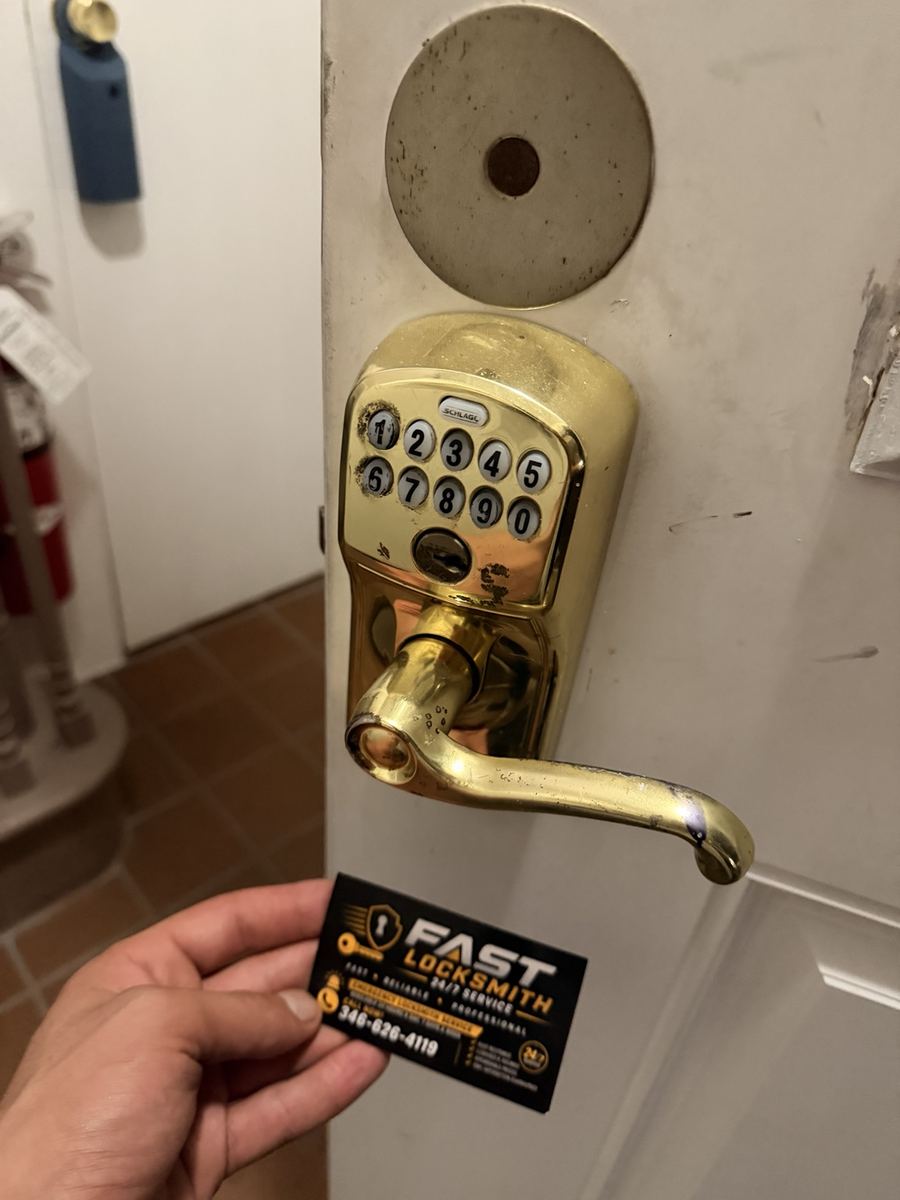
He explained calmly what he'd do and why. He removed the old knob and deadbolt and fitted a new Grade 1 deadbolt with a heavy strike plate and 3-inch screws into the stud, and a new lever with a solid latch. Over the latch side of the frame, he added a steel latch guard so a pry bar would have nothing to grip. He changed the service door and French door locks the same way and keyed all of them alike.
She tested each deadbolt with the door closed and pushed hard. Nothing moved. His last words were gentle: throw the deadbolt every night, even when you're tired, because the latch alone is just a latch.
A Practical Guide to Changing Locks
If You Think Someone Is Inside
Leave, go somewhere safe, and call 911. Don't go in until police have cleared the house. We'll come once it's safe.
Lock Change After Break In or an Attempt
After a break-in or a pry attempt, check the strike, the jamb and the latch, not only the lock. We replace damaged hardware, fit heavier strikes with long screws, add latch guards where they make sense, and tell you if the frame needs a carpenter.
When Rekeying Is Enough
Change the locks when they're damaged, worn, low grade or you want stronger hardware.
Usually Finished in One Visit
Most lock changes are done in one visit with hardware from the van.
Choosing Stronger Hardware
Grade 1 deadbolts with full one-inch throws, heavy strikes with 3-inch screws, solid latches, and latch guards on doors that face the yard. For more on strikes and bolts, see deadbolt installation. For historic doors, we can match the look of the original hardware.
Service Doors and French Doors
The back of the house is where most attempts happen, because it's out of sight. Service doors and French doors deserve the same hardware as the front entry. Many French doors also need a top and bottom bolt on the inactive leaf.
Gates and Side Yards
A side gate that latches but doesn't lock gives anyone a quiet path to the back door. A keyed gate latch, or a padlock on a sturdy hasp, closes that path. It's a small change that makes the doors behind it harder to reach unseen.
Staff Changes and Lost Trust
When a staff member or contractor leaves on poor terms, or a relationship ends, changing or rekeying the locks is a normal, sensible step. Change gate codes and alarm codes that day.
Codes and Openers
New locks don't change gate keypads, garage codes, alarm codes or smart lock users. Reset those too. If you'd rather manage access by code from now on, see smart lock installation.
Cameras, Lights and the Back of the House
Locks are one part of it. A motion light over the service door, a camera aimed at the back entry, and trimming shrubs that hide a door from the street all make a pry attempt less appealing. We don't install cameras or lighting, but the technician will point out where the back of the house is most exposed while he's there, since he's already looking at it with a burglar's eye.
Who Can Ask for New Locks
Owners, or someone with written authorization from the owner. Renters need landlord approval.
Mobile Coverage in River Oaks
Give the dispatcher your address in River Oaks, and the work is arranged at that door. Early mornings are usually quick. Late afternoons near River Oaks District and around school pickup are slower.
Calm, Careful Technicians
Our technicians wear the company uniform and carry ID, which matters when you're already uneasy about a stranger at your door. They speak with you before touching anything, look at the damage and the frame, and explain each step. They work cleanly, protect floors and finishes, and test every new lock with the door closed before they leave.
Fast Locksmith 24/7 is licensed and insured, and we're rated 5 stars on Google by Houston homeowners.
Lock Changes Around River Oaks
Lock changes in River Oaks often follow a pattern: an attempt at a back door out of sight from the street, a staff change, a new owner, or the end of a long renovation. Many homes have original doors with soft, decades-old jambs, so the strike side gets as much attention as the lock. The neighborhood's private patrol is often first on the scene after an attempt, and we're glad to work alongside them.
Changing the locks throughout a River Oaks house is a bigger job than it looks. Doors vary in thickness, preparation and style, and a finish that suits the front entry might not suit the garage side. We'll plan the set with you before we start.
Tell us about the finishes in the house. Oil-rubbed bronze, polished brass, satin nickel and matte black are all common, and a consistent look from door to door makes a difference.
Photograph the doors and the existing hardware. It helps us check compatibility, and it lets the dispatcher tell you whether we carry the parts or need to order them.
Decide how you want the keys arranged. One key for every door, or separate keys for staff areas, a guest house or a workshop. We can set it up either way.
Keep the old hardware until you're sure everything fits. Sometimes a small adjustment is needed, and it's good to have the original to compare.
If a door has been damaged by a prior install, we'll show you and suggest a repair before fitting anything new.
Consider a keypad for the garage entry or the pool house, where a physical key is easy to lose. Many of our clients mix traditional locks on the front with keypads at the back, and the combination works well.
Ask about weather ratings if a door faces the sun or the rain. Hardware that looks perfect in June can pit and fade by September on an exposed door.
If you're updating an older house, check whether the doors still have their original bores. We can often adapt a modern lock to an old door without cutting new holes.
Make the Doors Yours Again
Call Fast Locksmith 24/7. Tell us what happened, which doors you want changed, and whether police or the patrol have been out.
Estimated Technician Arrival Time
Arrival times vary depending on your location and technician availability.
Actual arrival time may vary depending on your exact location, traffic conditions, time of day, current demand, and technician availability.
Providing your exact vehicle location when calling allows us to give you a more accurate estimated arrival time.