Don't force the door.
A Staff Daycare, a Forgotten Key Ring and Parents on Their Way
What people fear before dawn is usually worse than what happens. Here's a typical example from a daycare near the Medical Center that serves hospital families.
A little after six in the morning, the director of a small daycare pulled into the lot and realized her keys were in her other bag, at home on the far side of the Beltway. The assistant director, the only other person with keys, was on vacation. The first parents, mostly nurses and respiratory therapists due on the morning shift, would start arriving in about half an hour with babies and toddlers.
She was sure of how it would go. She'd have to call every family and tell them to find other care, and half of them would be late for their shifts. She called us mainly to see whether anything at all could be done before then.
The dispatcher was direct. Safe? Yes, in her car in the lot. Anyone inside? No, the building was empty overnight. What lock? A glass front door with a narrow metal frame and a keyed deadlock. Alarm? Yes, and the code was in her phone, but the alarm company sometimes asked for a passcode too. Proof she ran the business? Her ID, the state license on the wall visible through the glass, and the owner could confirm by text. The dispatcher said the technician was and suggested she call the alarm company now to have the passcode ready.
A uniformed technician pulled up ID in hand. He checked her ID against the license through the glass and read the owner's text. He picked the deadlock's cylinder with a pick and tension wrench. The first try didn't turn; the bolt was under pressure from the door's weatherstrip. He asked her to push the door gently toward the frame, and the second try turned. The door opened.
She punched in the alarm code. The alarm company called; she gave the passcode. Done. The first parent walked later with a sleeping baby.
She'd expected a morning of apologetic phone calls. Instead every child was dropped off on time. The straight advice: one spare key with the owner, one in a lockbox only managers can open, and never just two keys for a business that opens at dawn.
Business Lockouts Near the Medical Center
Hands Off the Door
Prying glass storefronts bends their frames. Kicking back doors splits jambs. Forcing a key snaps it. Step back and call.
Locked Out Before Opening
If you're locked out before opening, tell the dispatcher when the first customers, patients or families arrive. We'll plan around it, and you can start calling ahead if needed.
License on the Wall, Owner on the Phone
Photo ID plus something tying you to the business: a state license on the wall, a lease, a business card with your title, or a text from the owner.
Glass Storefronts and Deadlocks
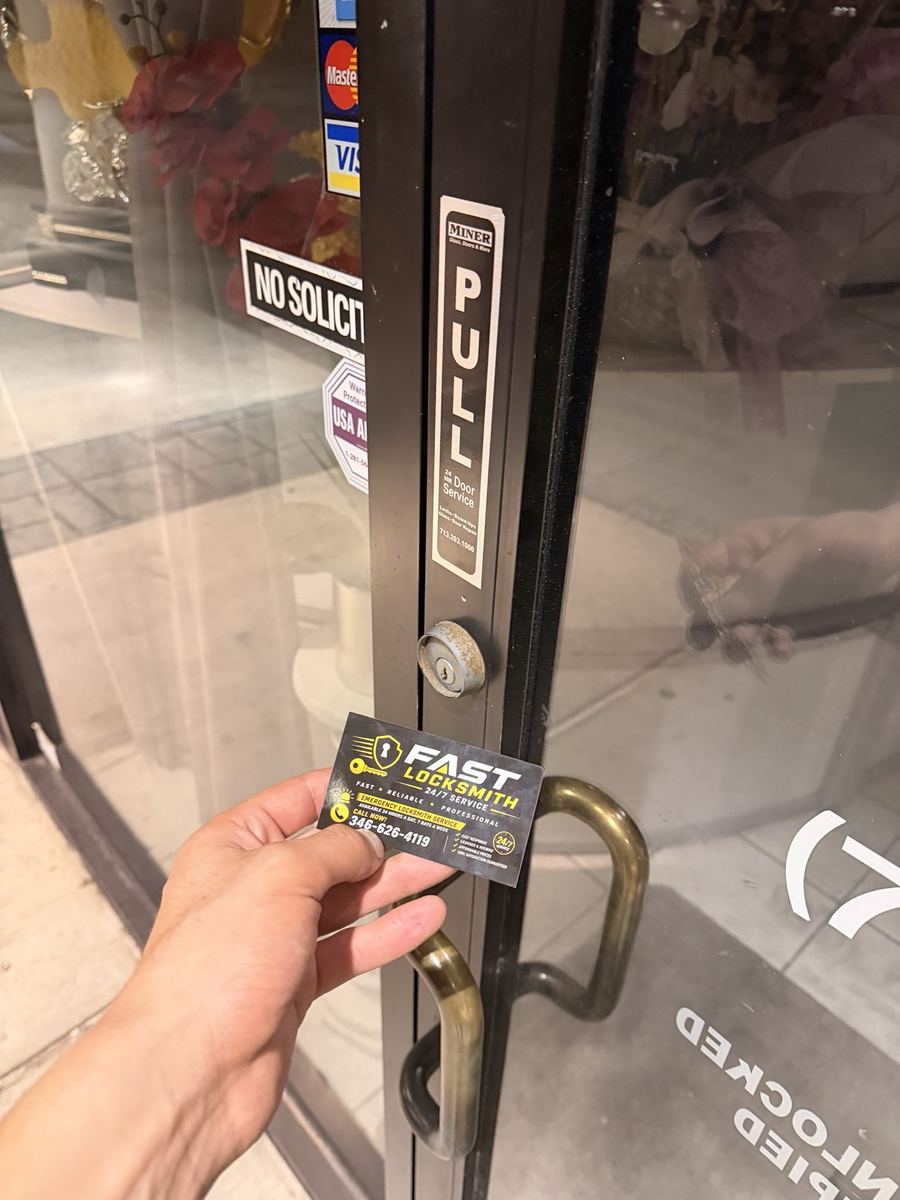
Many clinics, pharmacies and daycares near the Medical Center have narrow-stile glass doors with hook-bolt deadlocks. We pick the cylinder without damage. Pushing the door slightly toward the frame often helps the bolt release.
Alarms and Passcodes
Have the alarm code and any passcode ready. If your system is monitored, call the company before we open the door, so nobody sends police for a false alarm.
Locked Out of Office Suites in Medical Buildings
If you're locked out of office space in a medical office building, building security may need to escort us or confirm with management. Suite doors are usually keyed; building entries are usually badges.
Locked Out of Store or Pharmacy
If you're locked out of store or pharmacy premises with medication inside, tell the dispatcher.
When Medication or Samples Are at Risk
A door that won't lock at closing, pry marks on the frame, or medication, samples or patient records behind a failed lock make it an emergency commercial locksmith call. Call the police first if there are signs of a break-in. Then we secure the door, at any hour.
More Than Two Keyholders
A business that opens at dawn needs keys with more than two people. Keep a spare with the owner and another in a lockbox only managers can open, and post a short note of who to call when the director is away. Check that the alarm passcode is written somewhere the backup keyholder can find it.
Pharmacies and Medication Rooms
Pharmacies near the Medical Center often have a separate locked room or cage for controlled medication. If that's where the keys are, tell the dispatcher; we'll confirm authorization carefully and get the main door open first.
Clinics That Open Before Dawn
Clinics with early appointments should keep a spare with a second manager who lives nearby. It's worth setting up before it's needed.
Reaching Businesses Near the Medical Center
Whatever the address in the Medical Center, the technician brings the tools to you. Before the morning shift change, roads around the Medical Center are clear.
Direct, Efficient Technicians
Expect the technician in the company uniform, ID clipped on. They confirm authorization, open the door without damage and get out of the way so you can open. If the lock needs attention, they'll say so plainly. They also make sure the alarm is set right before they leave, if you ask.
Fast Locksmith 24/7 is licensed and insured, and businesses across Houston have rated us 5 stars on Google.
Commercial Lockouts Around the Medical Center
Business lockouts near the Medical Center come from staff daycares, clinics and medical offices, pharmacies, labs, coffee shops and cafes that serve hospital staff, and offices in medical office buildings. A commercial lockout near the Medical Center often happens right before an early opening. If you're searching for an office lockout near me or a business lockout service at dawn, call and tell us when you open. Early openings are the rule here, so many of these calls come in well before sunrise, from owners and managers who need to be open when the first shift begins. Coffee shops and cafes serving hospital staff open early too, and a lockout there means a line of nurses and residents waiting for coffee before their shifts.
A commercial lockout near the Medical Center might involve a tenant, a landlord and a property manager. Tell the dispatcher who is on site and who can confirm you have the right to enter.
Bring something that shows the space is yours: a lease, a business license, a utility bill or an employee badge.
Mention alarms. Many clinics have door sensors, and an alarm company that expects a call can prevent a false dispatch.
Storefront glass doors use different hardware, and some have a bar that needs particular tools.
If the door is damaged, we assess what is needed to secure it.
A lockbox or keypad can help a business that locks itself out more than once.
After hours, a text or call from the owner confirming the work helps us begin.
Medical offices may have privacy rules. Tell us what we should and should not enter.
Keep a list of who has keys. When a lockout happens, it helps to know whether someone else could open the door sooner.
Keep the landlord's contact and the alarm company's number in your phone.
Take a photo of the lock and the door before we arrive. It lets us prepare the right tools.
We also handle business lockouts in Midtown, Meyerland and West University Place. For keying plans, see commercial locksmith, and for late-night help, 24 hour locksmith.
Estimated Technician Arrival Time
Arrival times vary depending on your location and technician availability.
Actual arrival time may vary depending on your exact location, traffic conditions, time of day, current demand, and technician availability.
Providing your exact vehicle location when calling allows us to give you a more accurate estimated arrival time.