
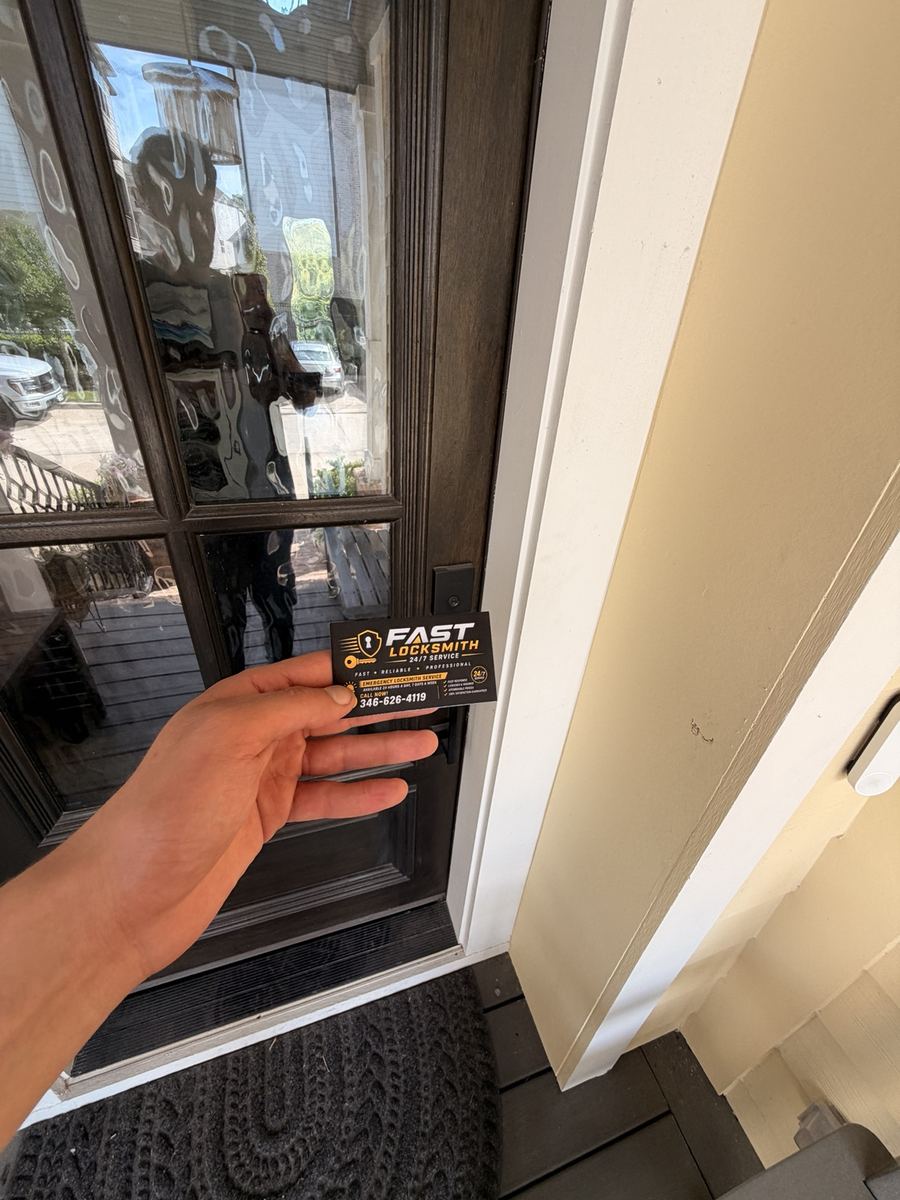
A Typical Rekey: When a Roommate Leaves Angry
Here's how a rekey call often comes in.
A woman owns a two-story townhome in west Houston. For a year, she rented the spare bedroom to a roommate. It didn't end well. The roommate moved out over a weekend, left behind an argument and an unpaid utility bill, and did not leave behind the house key or the garage remote. Nothing has happened since, but she's lying awake listening for the door.
She calls us on a Tuesday morning and says she wants new locks. The person who answers asks what she has: a front door with a keyed knob and deadbolt, a door from the garage into the house with a knob, and a rear patio door. All of them work fine. He explains that rekeying would make the roommate's key useless without replacing anything, that it's usually done in one visit, and that the technician can put all three doors on one new key. Because she's anxious about it. He also reminds her to reprogram her garage opener today, since the roommate kept a remote.
The technician arrives that afternoon in uniform and introduces himself. He checks her ID and a utility bill showing the address. He walks the three doors with her, confirms the locks share a compatible keyway, and starts with the front door. He removes the deadbolt cylinder, pushes out the old pins with a follower tool, loads a new set of pins matched to a new key, and reinstalls it. He repeats that for the knob, the garage entry, and the patio door lock.
He cuts four new keys and has her try each one in every lock. Then, before he leaves, he takes her old key and shows her it no longer turns any of them. He helps her clear the old garage remote from the opener so it won't open the garage door anymore.
That evening, she still double-checks the deadbolt. But she knows the only working keys are the four on her kitchen counter.
What Rekeying Does
Inside most door locks is a row of small spring-loaded pins of different lengths. Your key lifts each pin to exactly the right height so the cylinder can turn. A different key lifts them to the wrong heights, and the lock stays shut.
Rekeying means taking the cylinder apart and replacing those pins with a new set that matches a new key. The lock body, the handle, the deadbolt, and the finish don't change. Only the key does. Every old key, however many copies exist, stops working.
Rekey vs. Changing Locks
| | Rekey | Change locks |
| --- | --- | --- |
| Old keys stop working | Yes | Yes |
| Keeps your existing hardware | Yes | No |
| Fixes a worn or damaged lock | No | Yes |
| Upgrades security grade | No | Yes, with a better lock |
| Can set all doors to one key | Often, if keyways match | Yes, with matching hardware |
If a lock is damaged, worn out, or low quality, see lock change or lock replacement. Otherwise, rekeying is usually the better value.
When to Rekey
- After buying a home, before you move your things in
- After a roommate, partner, or tenant moves out
- When a key is lost and you can't say where it went
- After contractors, cleaners, or house sitters had keys
- When an employee leaves a small business
- When you're tired of carrying four keys for one house
Keying Alike
Setting every lock to one key is called keying alike, and it's one of the most common parts of a rekey. It works when the locks share the same keyway, which usually means the same brand family. If one lock uses a different keyway, you can keep a separate key for that door or replace it with a compatible lock.
Smart Locks and Rekeying
Many homes now have a keypad or smart lock on one door and keyed locks on the rest. The smart lock's backup cylinder can usually be rekeyed to match the others, so one key works everywhere. The electronic codes are separate; rekeying doesn't touch them. Delete old users and change the master code on that day.
Controlling Copies
A key stamped "Do Not Duplicate" is widely copied anyway. If you need real control, ask about a restricted keyway. Blanks aren't sold to the public, and new copies can only be cut through an authorized locksmith with your approval. It's especially useful for rentals and homes with rotating help.
Rekeying for Landlords
Texas law requires residential landlords to rekey security devices within a set period after each tenant moves out. We work with authorized landlords and property managers on turnovers, can set up a master key so you can open every unit while each tenant's key opens only their own, and keep the visit quick so the next tenant isn't kept waiting.
How We Get to You in Houston
A technician comes to you wherever you are in Houston. If someone you don't trust has a key, it's reasonable to want the job done today. For planned rekeys, like a move-in or a tenant turnover, we'll book a time that works for you.
The Technicians Who Rekey Your Locks
Our people show up in company uniforms and can show you ID before they start. They confirm you own the property or are authorized to make changes before rekeying anything, walk the locks with you, and tell you plainly if a lock is too worn to be worth rekeying. They handle your hardware and finishes with care, test every lock with every new key, and point out anything else they notice, like a dragging strike or a door that doesn't latch cleanly.
Licensed and insured, Fast Locksmith 24/7 has earned a 5-star rating on Google from customers across Houston.
Rekey Service Around Houston
Rekeying is one of the most requested services in a city where people move often, rent widely, and renovate constantly. New homeowners in Oak Forest and Garden Oaks rekey before moving in. Landlords near the universities and the Medical Center rekey between tenants every summer. Townhome owners in Midtown and EaDo rekey after roommates leave. And homeowners all over the metro rekey after hurricane repairs, when crews and adjusters have been in and out for weeks.
Rekeying is the quiet fix for a loud worry. If a former roommate, a past tenant, a contractor or a stranger might hold a key, the locks can stay exactly as they are while the keys change. Old keys stop working and new ones take over.
Gather the keys you have before the technician arrives. Having at least one working key for each lock makes the job simple, and having them all lets us group the doors onto a single key if you'd like that.
Make a list of every lock you want rekeyed. Front door, back door, garage entry, side gate, mailbox, shed and padlocks all count. The technician can decide on site which ones are worth rekeying and which are better replaced.
Rekeying won't make a weak door stronger. If the frame is split or the strike plate is held by short screws, we'll tell you and show you the problem. You decide what to do about it.
Label the new keys. A small tag noting which door each opens saves confusion in the first few weeks, especially in a household with teenagers.
For local details, see rekey service in Midtown, Westchase, and Pearland. For whole-home lock work, see our residential locksmith page.
Make the Old Keys Useless
If you're not sure who has a key to your home, call Fast Locksmith 24/7. Tell us how many locks you have and what you'd like.
Estimated Technician Arrival Time
Arrival times vary depending on your location and technician availability.
Actual arrival time may vary depending on your exact location, traffic conditions, time of day, current demand, and technician availability.
Providing your exact vehicle location when calling allows us to give you a more accurate estimated arrival time.