
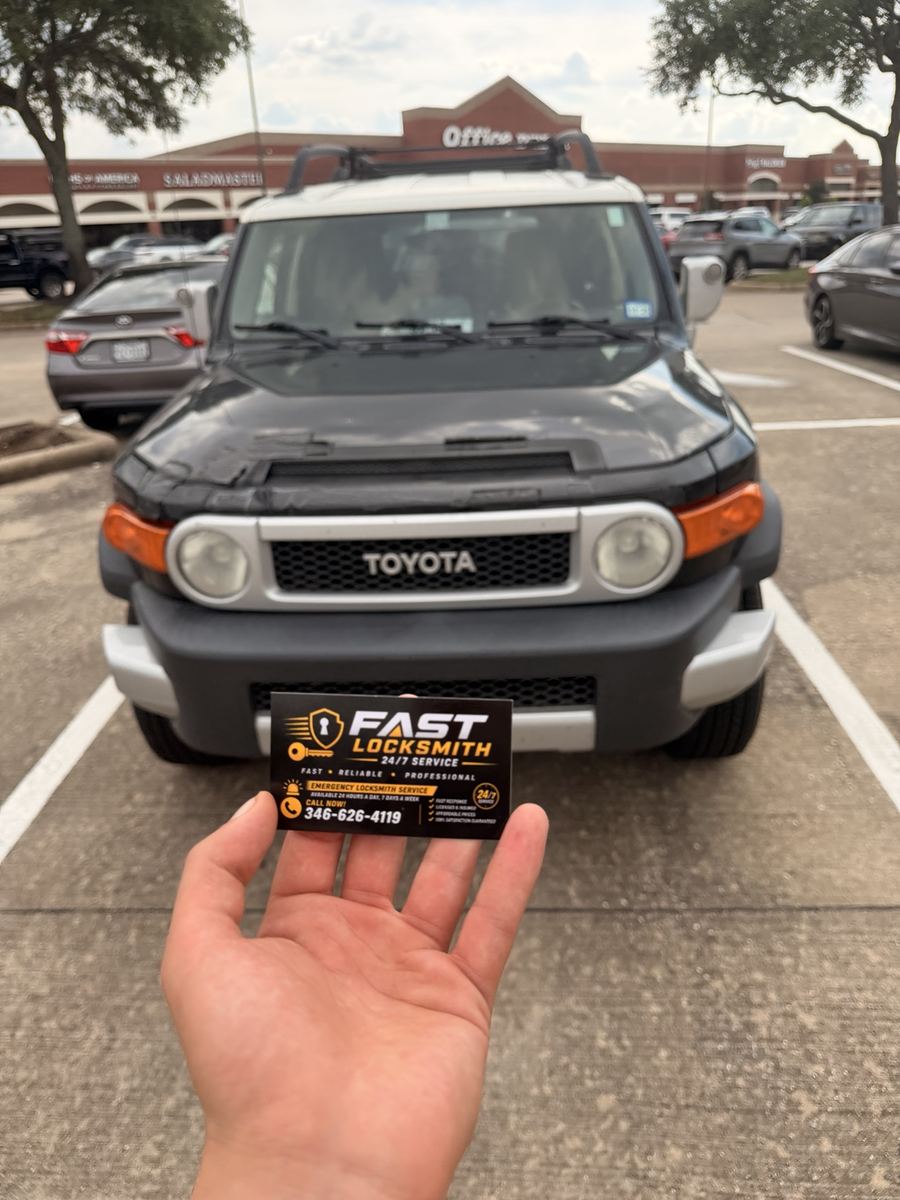
A Kiosk Copy That Worked for a Week
Low-grade shortcuts can fail at awkward moments. Here's a typical example from a school parking lot off Yale Street.
She found a key-copying kiosk at a store, fed in her original, and a few minutes later had a copy that, the screen said, cloned the chip. It worked. For a week, she used the copy every day and kept the original at home. Then one afternoon in the school lot, the car cranked and died. She tried again. The dash flashed a security light. The car wouldn't stay running.
She called us from the lot. Our dispatcher asked what the car did: crank and stop, or not crank at all? Crank and stop, with a flashing light. Was it a copy or an original? A kiosk copy. That pointed to the clone. The dispatcher explained it simply: a cloned chip imitates the original key's signal rather than being added to the car's memory, and some clones become unreliable. A properly programmed key would fix it. Was the car in her name? Yes. Could someone bring the original? Her husband could, from home, a few minutes away. The dispatcher said the technician was on the way.
The technician pulled up in uniform and held up his ID. He checked her license and registration. He tested the copy with his transponder reader. The clone's signal was weak and inconsistent. He cut a new key on his key-cutting machine, then connected his programmer to the OBD port.
This model required a security wait before it would accept a new key. He explained it while the timer ran, and her husband arrived with the original in the meantime. When the wait ended, the programmer added both the new key and the original to the car's memory properly. He tested each one several times, starting and stopping the engine. The clone, he suggested, should go in a drawer as a door key only.
The explainer's takeaway: a programmed key is added to the car, while a clone pretends to be another key. Both can work, but only one is designed to keep working.
Pairing, Cloning and Everything In Between
The Chip and the Immobilizer
Your car's immobilizer stores codes for the keys it trusts. Each key's chip sends a code when you turn it or press start. If the code doesn't match, the engine won't run, or it starts and shuts off a second later.
Programmed Keys Versus Cloned Keys
A programmed key is added to the car's memory. A cloned key copies another key's signal. Clones can work well, but some lose reliability, and they stop working if the original key is ever erased. Transponder key programming done properly avoids both problems.
Cloned Car Key Stopped Working
If a cloned car key stopped working, don't keep trying it. The car may flag repeated failed attempts. Use the original if you have it, then call. We'll program a proper key in its place.
Program New Car Key Hardware
To program new car key hardware, we check the part number and chip type, cut the blade if needed and add it to the car. Some models require every existing key present; others need only a security code. We'll check before starting.
Smart Key Programming Heights Drivers Ask About
Smart keys work from a pocket or bag, and they're programmed the same way. Smart key programming in the Heights often comes up after a battery change or a repair. A weak fob battery is the most common cause of trouble.
Lock Buttons Dead, Engine Fine
Think of the buttons as a second, separate system living in the same key head. When the engine starts but the doors won't respond, the remote half has lost its pairing or its battery. We program key fob remotes on their own when that's the only fault, after testing the coin cell and the contacts, and we leave the chip alone if it's working.
Bargain Keys From the Internet
A key from an online seller can look identical to yours and still carry the wrong chip, run on the wrong frequency or arrive already married to someone else's car. Photograph the back of your key and the listing's part number and send both to the dispatcher.
Security Waits
Some brands make you wait while the car confirms a new key. It's normal and part of the anti-theft design. We'll tell you if your car has one.
Your Name on the Paperwork
Photo ID and registration, title or insurance in your name, or the owner's authorization. Teachers, nurses and contractors often drive cars registered to a spouse or a business; a quick call from the owner covers it.
Getting to Your Car in the Heights
Across the Heights, the work happens where you are: at the curb, the door or the lot. The Heights is close to I-10 and I-610, with Shepherd, Durham, Yale and Studewood running through it. School pickup times around Yale and 20th Street and rush hour on I-10 are slowest. School and shop lots are usually easy to reach.
Technicians Who Explain What Went Wrong
The technician arrives in uniform with ID. They test the key before programming, tell you in plain words why it failed and what they'll do about it, and keep the cabin tidy. Every function is tested before they leave.
Fast Locksmith 24/7 is licensed and insured, and Houston drivers have rated us 5 stars on Google.
Car Key Programming Around the Heights
Programming calls in the Heights come from school and church lots off Yale and Heights Boulevard, driveways beside bungalows, shop lots on 19th Street and townhome garages near White Oak. Car key programming in the Heights is usually a short visit at the car. If you're searching for key programming near me after a copy stopped working, call and describe what the car does. Teachers, nurses and contractors who run on one key are the most common callers, and most of them leave with a proper spare too.
Car key programming is what makes a key start the engine. The chip inside has to be recognized by the car's computer, and that takes a diagnostic tool and the right software.
The method depends on the make. Some cars let us program from inside the car with a tool plugged into the port under the dash. Others need a security step, and a few still require the dealer. We tell you which before we start.
Tell us what happened. A key bought online, a recent battery change or a repair shop visit can each explain why a key stopped working.
Bring every key you have. Some systems need all of them present.
Ask the technician to explain each step. A good one will tell you what the tool is doing and why your make needs it.
After programming, start the car, shut it off and start it again with each key to confirm the pairing held.
We also program keys in Montrose, Downtown Houston and Spring Branch. For a brand-new spare, see car key replacement, and for push-button fobs, key fob programming.
Estimated Technician Arrival Time
Arrival times vary depending on your location and technician availability.
Actual arrival time may vary depending on your exact location, traffic conditions, time of day, current demand, and technician availability.
Providing your exact vehicle location when calling allows us to give you a more accurate estimated arrival time.