Shut out of your business? Call, and a technician heads your way.
Twenty years in this trade have taught me one thing: the earlier you call.
The Opening Morning When the Lockbox Key Was Not on the Ring
Some lockouts begin with a small discovery. Here is a typical example from a farm-supply store on a busy morning.
The manager of a farm-supply store arrived around seven in the morning, an hour before opening. A line of pickups waited in the lot, and a delivery truck idled by the dock. She reached for the ring on her belt and counted keys. The front door key was there. The key to the lockbox, which held the alarm code and the spare for the storefront, was not. She went back to her car, checked the console and the seat, and came up empty. She realized she had left it in her other jacket, at home, across town.
The front entry had a deadlatch, and the key she had would not turn it, because the lock had been rekeyed the week before and the new keys were in the lockbox. She called us and described it. The dispatcher asked the key questions. Was anyone inside, and was the building safe? Nobody, and the alarm was off. Could she show a license and her manager's badge or a letter from the owner? She had both. A technician was heading over, and the dispatcher asked her to keep customers away from the door.
The technician pulled in, held up his ID and checked her license against the badge. He looked at the entry and the frame. His first try was a long-reach tool through the gap at the top, aimed at the inside handle, and the gap was too tight for it. He did not force the glass in it. He knelt at the cylinder, set a tension wrench and worked the pins with a pick. On the second try the cylinder turned, and the door opened with no damage to the glass or the frame.
The manager flipped the lights on, and the first pickup pulled up to the door. The technician checked the lock, cut two new keys on the spot and handed her one for the lockbox. The old hand's advice: keep a second copy of the critical key at a different location, and tell two people where.
What a Business Lockout Involves
A Missing Key on Opening Day
The worst time to lose a key is when customers are waiting. A clear plan keeps the door from becoming the story of the day.
Storefront Frames
A storefront carries a thin frame and a small lock. We open it without scratches, cracks or bent hardware.
What a Lockbox Holds
A lockbox is a handy place for a spare, and a trouble if its own key goes missing. We open the door and help you reset the system.
Reading the Lock
Commercial cylinders vary. A quick look tells the technician whether to pick, bypass or drill, and he picks the gentlest.
A Search for Commercial Lockout Near Me
For a commercial lockout near me search, add the business name and the street.
Armed Systems and Who Disarms
If an alarm is armed, we tell you before we open anything. Have your code ready and a person who can disarm.
Rear Entries and Dock Doors
Sometimes the quickest way in is the rear. We tell you if that is the safest choice.
Once the Entry Gives
We test the lock, the closer and the latch. Then we talk about a spare and a plan.
Authorization Before We Start
A photo ID and a lease, deed, owner's letter, manager's badge or business license.
Reaching Your Storefront in Rosenberg
Every call in Rosenberg is handled on site, at your door, driveway or lot. Downtown storefronts, shopping center units, farm-supply yards and offices off the freeway are regular stops. If you are beyond a rail crossing, tell us the side, and we route around a long train.
A Technician Who Protects the Frame
He arrives in uniform with his photo ID out, checks your authorization and walks around the door before he starts. He picks the method least likely to leave a mark and tests the lock when it is open.
Fast Locksmith 24/7 is a licensed and insured company with 5 stars on Google from Houston-area customers.
Commercial Lockout Around Rosenberg
Commercial lockout in Rosenberg tends to follow the town's rhythm, and Rosenberg shop owners know that rhythm well. Stores open early, trucks arrive before dawn and the railroad runs through the day. A locked door is the quickest way to lose one.
Check your keys the night before, the way a pilot checks a list. Count the ring, find the lockbox key and confirm the alarm code. A two-line note on the office door can save a lot of time.
Share the plan. Make sure two people know where the spare is. A lockout is far more likely when one person holds every key.
Think about the lot. A Rosenberg farm-supply yard, a downtown storefront and a shopping center unit each have a different way in. The technician checks the rear and the dock before he touches the front, since the quiet route is often there.
Keep customers calm. A sign on the door with a time you expect to open, and a friendly word, buys you the goodwill you need.
Do not force a storefront, and do not ask a customer to help you lift it. Pulling or prying can crack the frame. Wait for the technician, and the door stays whole.
Mind the alarm. If you open a door with an alarm armed, expect a response from the monitoring company. Have your code ready.
Mind the delivery window. A supplier who shows up at dawn to a locked dock may move on to the next stop. Tell vendors who to call if the door is stuck, and give them a number that is answered. Rosenberg suppliers run tight routes, and they notice who is ready for them.
Rekey on a schedule. A lock rekeyed last week means last week's keys are junk. Tell everyone, and put the new ones in a known place.
Train a second opener, and make sure that person can reach the shop in a reasonable time. In a small Rosenberg business the owner or one manager often holds every key. Pick a second person you trust, give them a key and show them the alarm.
Write down the lock type.
Keep a spare off site, ideally with someone who lives close to the shop and answers the phone.
A commercial lockout in Rosenberg might involve a tenant, a landlord and a property manager. Tell the dispatcher who is on site and who can confirm you have the right to enter.
Bring something that shows the space is yours: a lease, a business license or an employee badge.
Keep a list of who has keys, and the landlord's contact in your phone. In a lockout, those are the calls that speed things up most.
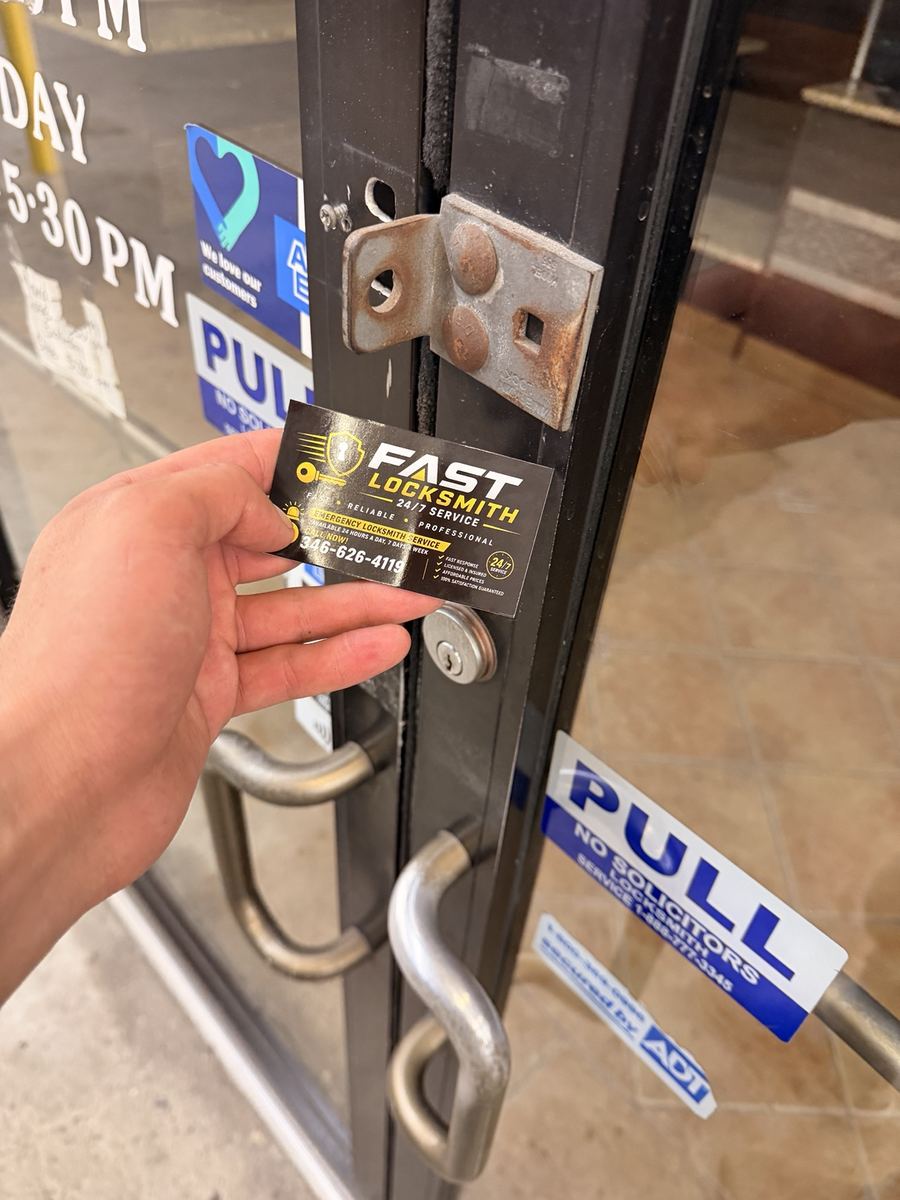
Storefront glass doors use different hardware, and some have a bar that needs particular tools. Tell us what you see.
Take a photo of the lock and the door before we arrive. It lets us prepare the right tools.
Mention alarms. Many shops have door sensors, and an alarm company that expects a call can prevent a false dispatch.
Keep a list of who has keys, and the landlord's contact in your phone.
We open business doors in Richmond, Sugar Land and Fulshear too. For ongoing hardware, see commercial locksmith; for after-hours trouble, emergency locksmith.
Estimated Technician Arrival Time
Arrival times vary depending on your location and technician availability.
Actual arrival time may vary depending on your exact location, traffic conditions, time of day, current demand, and technician availability.
Providing your exact vehicle location when calling allows us to give you a more accurate estimated arrival time.