
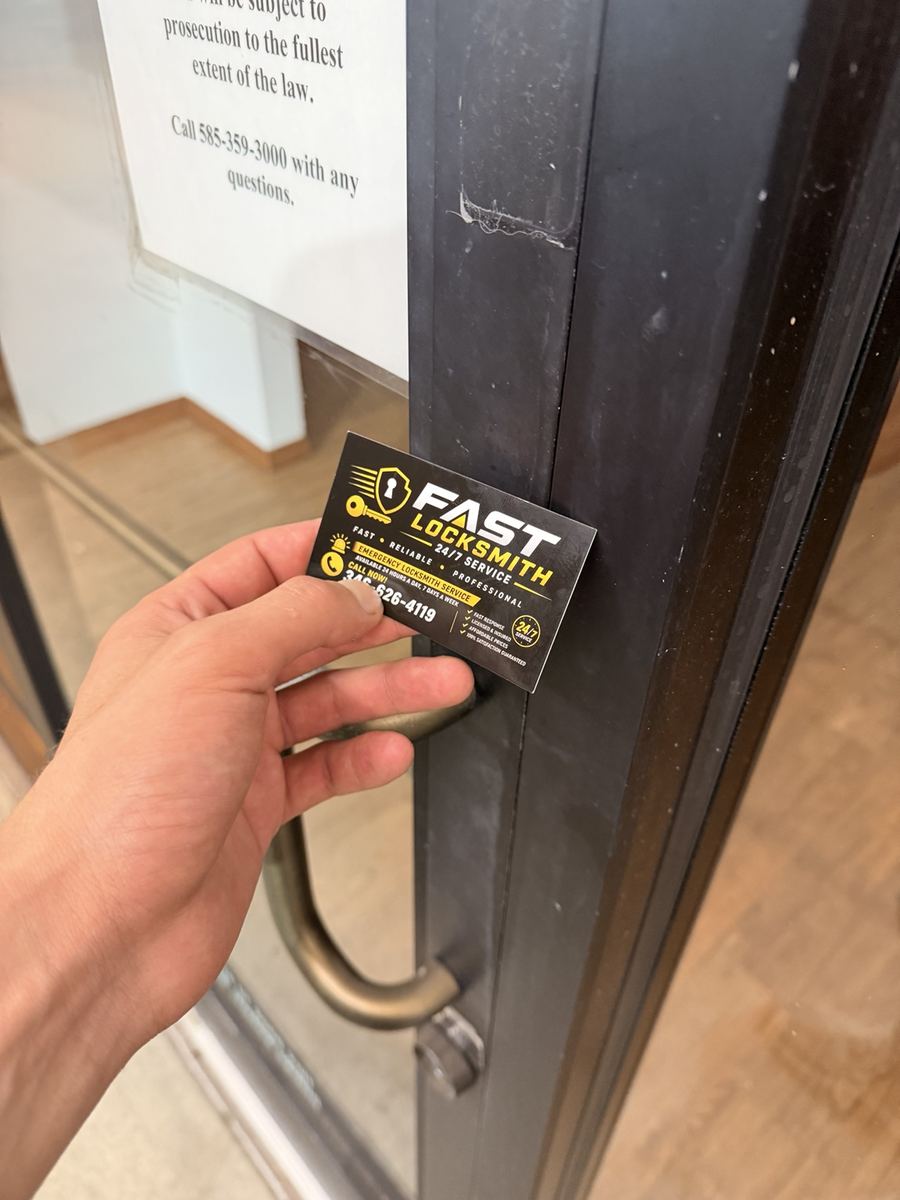
If a lock has failed tonight and the door will not secure, a technician heads over.
A planner's rule: replace a lock when it starts to fight you, not after it quits.
A Weekend Swap, a Backwards Part and a Door That Would Not Lock
Plenty of homeowners try to replace a lock themselves. Here is a typical example of what can happen, told step by step.
A homeowner in an older neighborhood near the creek had a front deadbolt that stuck in summer humidity. He bought a new one at a home center on a Saturday morning, watched a short video and took the old lock off his oak-shaded front door. The new one went on in less than an hour. He tightened the screws, turned the key and felt it click. He closed the door, turned the key again and nothing moved. The bolt stayed home.
He tried again, and he got the same result. He took the lock apart, reassembled it and tried a third time. By then it was dinner time, and he did not trust the door. He wedged a chair under the knob, sat down to eat and called us before the dishes were cleared.
Our dispatcher asked the planner's questions. Was the door shut and the house secure for now? The chair was in place. Did the key turn freely, with no resistance? It spun with no feel. Was the old lock saved? Yes, in a bag. Did he have a license and a closing paper showing he lived there? Both. She said a technician was heading over, and she suggested he not touch the lock again.
The technician pulled up in uniform and held up his ID. He checked the license against the paper and examined the lock. The key turned a tailpiece, a small metal arm at the back of the cylinder, and it was installed backwards. It spun against nothing instead of pulling the bolt. His first try, flipping it, did not fully fix the problem, because the bolt hit the strike plate off-center. He moved the strike a fraction of an inch with a chisel and a file and tried again, and the second try threw the bolt cleanly.
He left the new lock, fitted a matching one on the back door and replaced the strike screws with longer ones. The homeowner ran the key through ten times and laughed. The technician pointed out that the old back door lock showed corrosion at the latch and recommended changing it in the same visit. The planner's advice: if a swap takes more than an hour, stop and ask for help before the lock is on and the door is not secure.
Choosing and Fitting a Replacement
Do-It-Yourself Swap
A do-it-yourself swap can work, but a small mistake leaves the door unsecured. We can finish a half-done job and check the rest.
Backwards Tailpiece
A backwards tailpiece lets the key turn without moving the bolt. It is one of the most common home install errors.
Bolt That Won't Throw
A bolt that won't throw can be a lock problem, a strike problem or a frame problem. We find which one and fix it.
Corroded Latch
A corroded latch sticks and wears. Humidity and spring storms speed it up.
Asking for Lock Replacement Near Me
A lock replacement near me search works best with your door count, the lock brands and a photo of each lock. Tell us what happens when you turn the key.
Brass, Nickel or Bronze to Match
We match brass, nickel, bronze or black finishes to your other hardware. A set that matches looks like it belongs.
Grade and Strength
Locks come in grades. A higher grade has a stronger bolt and a better case. We recommend a grade that fits the door.
Strike Plates and Screws
A strike plate set into the frame with long screws takes the force of a shove. Short screws leave the door weak.
Doors That Have Warped
A warped door can strain a new lock. We adjust hinges and strikes before we blame the hardware.
ID and an Address Paper
Bring a photo ID and a bill, lease or deed with the address.
Old Hardware Disposal
We take the old lock away if you ask. You do not have to find a place for it.
A Replacement Visit in Klein
Where you are in Klein decides which technician is sent, and the dispatcher tells you who is coming. For a planned replacement, we offer a window that fits your day.
A Technician Who Plans the Fix
He wears our uniform and shows photo ID at the door. He looks over the lock, the door and the frame before he buys anything, explains the plan and tests the result. He leaves you with a list of any other weak points he saw.
We're licensed and insured, and customers around Houston rate Fast Locksmith 24/7 5 stars on Google.
Lock Replacement Around Klein
Lock replacement in Klein is as much about weather as wear, and Klein weather is hard on metal. The air is humid for most of the year, summer storms are heavy and the oaks keep a shade that holds moisture. Brass tarnishes, steel rusts and wooden frames swell. A lock that has lasted ten years in these conditions has done its job.
Plan your replacements. Walk your Klein house twice a year and try each lock. Note any that stick, wobble or take two tries. Replace the worst first, and keep the others on a short list.
Check the finish. A worn finish usually means a worn lock. If the brass is pitted or the plating is flaking, moisture has reached the metal inside. Replace before the cylinder seizes.
A thin bolt and a soft case may last a few years, and then they loosen. A high-grade lock suits a busy front door.
Match locks to doors. A hollow-core interior door does not need a heavy deadbolt. An exterior door does. The front, back and garage entry all deserve solid hardware, and the strike plate matters as much as the bolt.
Think about keys. When you replace locks, you can reset the key system. All doors can share a key, or each can have its own. Decide before the visit, and we will cut accordingly.
Smart locks and keypads fit into a replacement plan. A keypad deadbolt can replace a failing one with the same hole pattern. We can install it and explain how it works.
If you try a swap yourself, set aside a clear block of time. Take photos of each step. Keep the old parts until the new lock has worked for a day. If you reach a snag, stop and call.
Keep the old lock until the new one has proven itself. If something sounds wrong in the first week, a technician can compare the two and see what changed. Photograph the door before and after, because a clear picture shows a drifting frame better than a memory does.
Seasonal care helps. A dry lubricant once a year keeps latches smooth. Wipe dust from the keyway and avoid oil sprays. Keep the paint off the bolt and the latch plate.
Humidity is hard on exterior hardware. If a lock has begun to stiffen or corrode, replacing it before it fails keeps you out of a nighttime lockout.
Ask the technician to turn the new lock a few times with the door open, then closed. Any rub or snag is easy to fix while he is still there.
Ask about the screws that hold the strike. Short ones come loose after years of slamming, and longer ones reach the framing behind.
Keep the old lock for the technician to look at. Seeing how it failed helps him choose the right replacement.
We replace locks in Spring, Tomball and Humble too. If the locks are sound, see rekey service; for a fresh set of keys on every door, lock change.
Estimated Technician Arrival Time
Arrival times vary depending on your location and technician availability.
Actual arrival time may vary depending on your exact location, traffic conditions, time of day, current demand, and technician availability.
Providing your exact vehicle location when calling allows us to give you a more accurate estimated arrival time.